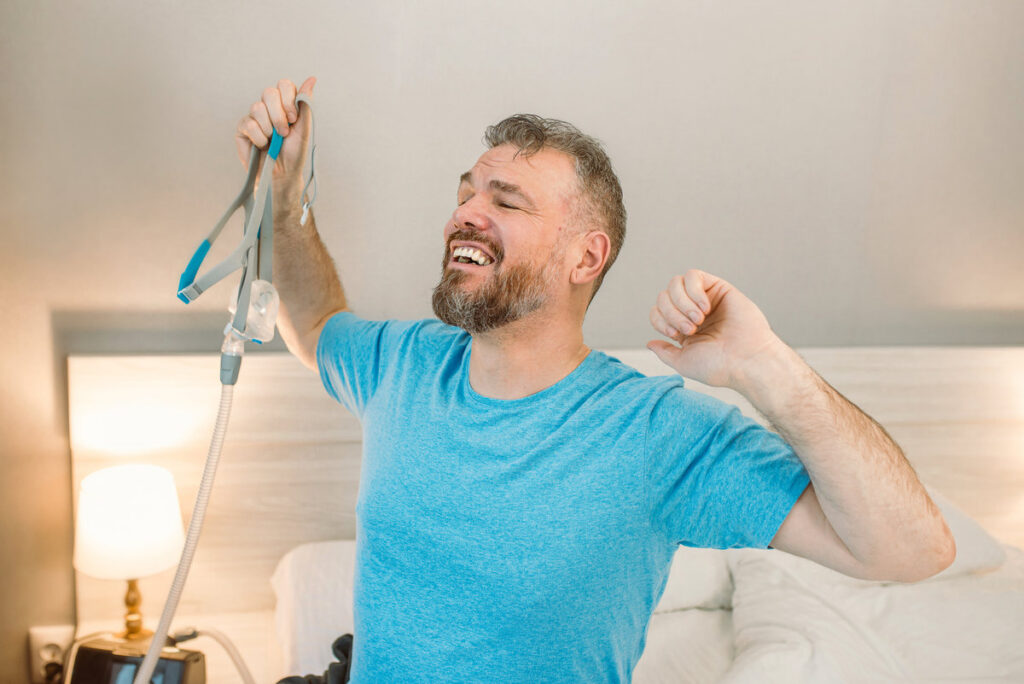
If you wake up exhausted despite a full night in bed, hear from your partner that you snore loudly or stop breathing at times, or notice new headaches most mornings, it may be time to talk to a dentist rather than waiting the symptoms out. These signals often point to obstructive sleep apnea, a condition where your airway repeatedly narrows or closes during sleep. Left unaddressed, sleep apnea is linked to a higher risk of high blood pressure, heart disease, stroke, and diabetes, so recognizing the warning signs early matters for your overall health, not just your rest.
Many people are surprised to learn that dentists play a meaningful role in identifying and treating sleep apnea, since several of the earliest physical clues show up in the mouth rather than on a sleep monitor. At DG Dental, airway health is part of how we approach every exam, and we invest in advanced diagnostic tools so we can evaluate your risk with more than a visual check. If you recognize any of the signs below, our sleep apnea treatment program is built to help you move from uncertainty to a clear plan.
Common Sleep Apnea Warning Signs You Might Notice at Home
Sleep apnea rarely announces itself with a single dramatic symptom. Instead, it tends to show up as a pattern of smaller issues that are easy to dismiss individually but become harder to ignore together. The list below covers the signs we hear about most often from patients and their partners.
Loud, Chronic Snoring
Snoring that is loud, happens most nights, and is broken up by silent pauses often points to a blocked airway rather than a harmless habit.
Witnessed Breathing Pauses
A partner reporting gasping, choking, or moments where breathing seems to stop is one of the more telling signs of obstructive sleep apnea.
Morning Headaches
Waking with a dull headache can reflect the drop in oxygen that happens during repeated breathing interruptions overnight.
Excessive Daytime Fatigue
Feeling drained after a full night in bed, or struggling to stay alert at work or while driving, often traces back to fragmented sleep.
Dry Mouth or Sore Throat
Waking with a parched mouth or scratchy throat can mean you spent much of the night breathing through your mouth.
Trouble Concentrating or Mood Changes
Memory lapses, irritability, or a foggy feeling during the day may be tied to the sleep disruption that sleep apnea causes.
None of these signs confirm sleep apnea on their own, but noticing two or three together is a reasonable reason to schedule an evaluation.
Physical and Oral Signs Your Dentist Can Spot
During a routine dental exam, we look for physical indicators of sleep apnea that you might not notice yourself. Worn tooth enamel from grinding, a scalloped tongue with indentations along its edges, and a narrow upper airway all suggest breathing difficulties during sleep. We also evaluate jaw position, since a recessed lower jaw can contribute to airway obstruction.
A 2025 clinical study indexed on the National Institutes of Health’s PubMed Central database found that visible scalloping along the sides of the tongue appeared in significantly more patients with sleep apnea than in those without it, giving dentists a practical physical marker to watch for during exams (2025 tongue scalloping research). We also look for a high, narrow palate, enlarged tonsils or a swollen uvula, and redness in the throat from chronic mouth breathing. Patients who mention waking with a clenched jaw or ongoing jaw pain are often describing symptoms that connect directly to their sleep quality.
Jaw and TMJ Discomfort Linked to Sleep-Disordered Breathing
Jaw soreness, clicking, or a tired feeling in the jaw muscles each morning is not always a standalone dental issue. In many cases, it reflects the body’s attempt to reposition the jaw and reopen a narrowing airway during sleep. When we see this pattern alongside other warning signs, we evaluate whether a TMJ evaluation should be part of your care plan alongside airway screening, since the two issues frequently overlap and respond to related treatment approaches.
Notice More Than One of These Signs?
An airway evaluation can help you understand what is happening while you sleep and what your options may be.
Risk Factors That Increase Your Likelihood of Sleep Apnea
Certain factors raise your likelihood of developing sleep apnea, and recognizing them can help you decide how quickly to seek an evaluation.
- Carrying excess weight, which adds tissue around the airway and makes obstruction more likely
- Growing older, since throat muscle tone naturally decreases over time
- Being male, though the risk for women increases after menopause
- Having a parent or sibling with sleep apnea
- Smoking, which irritates and inflames the airway
- Regularly using alcohol or sedatives, which relax throat muscles more than usual
If several of these factors apply to you alongside the warning signs described above, an evaluation sooner rather than later is generally the more comfortable path.
When to Escalate to a Sleep Study or Specialist
If you recognize several warning signs, the next step is seeking a proper evaluation rather than waiting to see if symptoms fade. We use pharyngometer and rhinometer equipment to measure your airway dimensions with a level of precision that a standard visual exam cannot provide. This technology captures detailed information about where and how severely your airway narrows, which helps in building a plan specific to your anatomy.
What a Dental Sleep Evaluation Involves
Home sleep tests offer a convenient way to gather initial data about your breathing patterns, oxygen levels, and sleep disruptions. For more complex cases, we may recommend an overnight sleep study at a specialized facility and coordinate with a sleep physician on the results. You can read more about how this process typically unfolds in our complete sleep apnea care timeline. The key is not delaying evaluation once symptoms are present, since sleep apnea tends to worsen over time and the health consequences can become more serious the longer it goes untreated.
How Routine Dental Visits Help Catch Sleep Apnea Early
Because dentists see patients on a regular schedule, often more frequently than a primary care provider, routine visits create a natural checkpoint for catching sleep-related warning signs early. During standard dental cleanings and exams, we are already looking closely at your teeth, gums, tongue, and bite, which makes it practical to note grinding patterns, airway narrowing, or jaw changes at the same appointment. Many patients are surprised to learn their dental concerns connect directly to their sleep quality, and that a checkup they scheduled for an entirely different reason can be the moment an airway issue first gets flagged.
Treatment Options Once Warning Signs Are Confirmed
Oral appliance therapy is a comfortable alternative to continuous positive airway pressure machines for many patients. These custom-fitted devices reposition your jaw and tongue during sleep, keeping your airway open so you can breathe more freely. We use data from our airway evaluation equipment to design appliances fitted to your unique anatomy, with the goal of maximizing both effectiveness and comfort. If you are weighing your options, our breakdown of oral appliances compared with CPAP therapy covers the practical differences in more detail.
Oral appliances tend to appeal to patients because of their convenience. Unlike CPAP machines, they are portable, quiet, and do not require electricity or ongoing equipment maintenance. Most patients adapt within the first few weeks and notice improvements in sleep quality during that window. We monitor your progress with follow-up appointments and can adjust your appliance as needed as part of our broader airway dentistry approach to care.
Get Better Sleep at DG Dental
Dr. Dory Green, DMD, FAGD, combines training from the Temple University School of Dentistry and a post-graduate hospital residency with hundreds of hours of continuing education focused on airway and sleep issues. Our practice has invested in advanced diagnostic equipment, including the pharyngometer and rhinometer system referenced above, so treatment decisions are based on detailed, objective data about your specific anatomy rather than guesswork. We have also designed the office to feel calmer than a typical dental visit, because managing sleep apnea should feel like a positive step, not another source of stress.
Learn more about our approach to comprehensive dental care at our about page. If you have noticed any of the warning signs described above, from loud snoring to morning headaches to jaw soreness, contact us to schedule your airway evaluation.
Frequently Asked Questions About Sleep Apnea Warning Signs
Can a dentist tell if I have sleep apnea?
A dentist cannot diagnose sleep apnea on their own, but a routine exam can reveal physical clues such as worn teeth, a scalloped tongue, or a narrow airway that suggest disrupted breathing during sleep. When these signs appear, we typically recommend a home sleep test or a referral for a full sleep study to confirm a diagnosis.
What are the first signs of sleep apnea a dentist might notice?
The earliest oral signs often include flattened or worn tooth surfaces from nighttime grinding, indentations along the edges of the tongue, and a jaw that sits farther back than usual. These findings frequently show up before a patient reports feeling tired or has been told they snore.
Should I see a dentist or a doctor first if I suspect sleep apnea?
Either can be a reasonable starting point. Many people notice oral or dental clues first during a routine cleaning, while others are prompted by a partner’s observations about snoring or breathing pauses. We can evaluate your airway and coordinate with a sleep physician if further testing is needed.
Can teeth grinding really be linked to sleep apnea?
Yes, in many cases nighttime teeth grinding is the body’s response to a partially blocked airway rather than stress alone. If you notice new or worsening tooth wear along with fatigue or snoring, it may be worth mentioning to your dentist at your next visit.
How soon should I schedule an evaluation if I notice these warning signs?
You do not need to wait for symptoms to worsen before reaching out. Because untreated sleep apnea tends to progress over time, an earlier evaluation generally gives you more comfortable and effective treatment options.
ABOUT THE AUTHOR
General & Airway-Focused Dentist, Fort Lauderdale
Dr. Dory Green trained at the Temple University School of Dentistry and completed a post-graduate hospital residency before pursuing hundreds of hours of continuing education focused on airway and sleep issues. At DG Dental in Fort Lauderdale, she combines that training with advanced diagnostic equipment to evaluate and treat sleep apnea and related airway concerns.