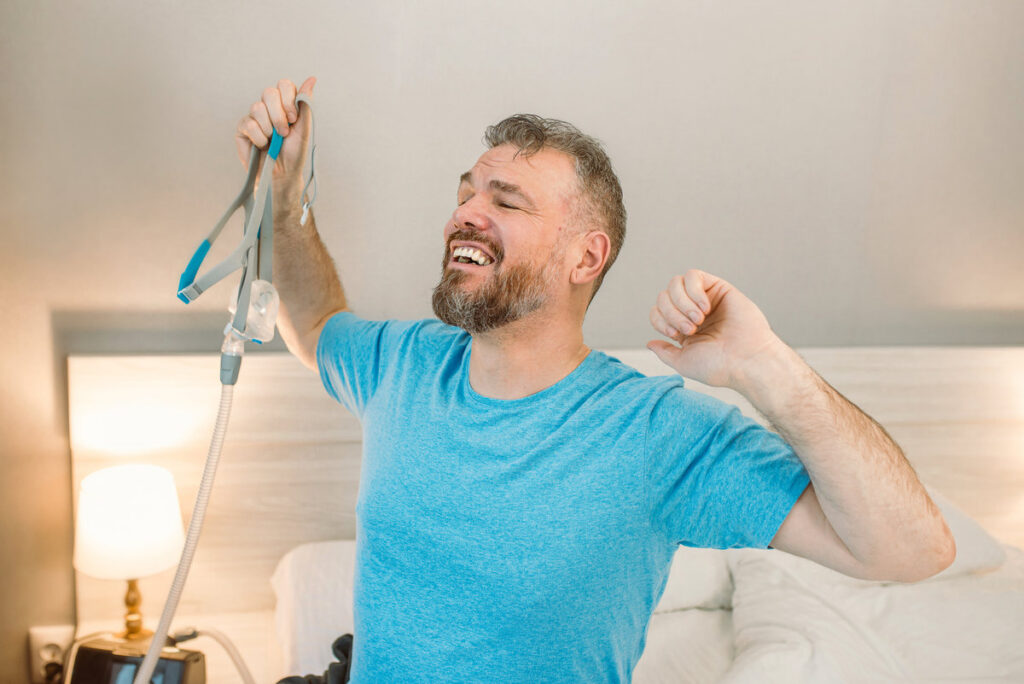
If you’ve been diagnosed with obstructive sleep apnea, you have more than one path to better sleep, and oral appliance therapy is a proven, effective option alongside CPAP. Both treatments help keep your airway open during sleep, but they differ significantly in comfort, convenience, and how well patients actually adhere to them over time. Understanding those differences is the first step toward choosing the approach that fits your life.
At DG Dental in Fort Lauderdale, Dr. Dory Green, DMD, FAGD, takes a whole-body approach to sleep apnea treatment that goes beyond simply handing you a device. Using a pharyngometer/rhinometer, a diagnostic tool that measures airway dimensions and nasal resistance, Dr. Green evaluates your airway precisely so that the treatment she recommends is grounded in your actual anatomy rather than a one-size-fits-all protocol.
How Each Treatment Works
Both CPAP and oral appliances treat obstructive sleep apnea by preventing airway collapse that triggers apnea events, but they do so differently.
CPAP (Continuous Positive Airway Pressure) delivers a steady stream of pressurized air through a mask worn over the nose or mouth. The air pressure acts as a physical splint, keeping the throat open throughout the night. It is highly effective for all severity levels of sleep apnea and is widely considered the gold standard by sleep physicians.
Oral appliance therapy uses a custom-fitted mouthpiece worn during sleep. The device repositions the lower jaw slightly forward, thereby tightening the soft tissues and muscles of the upper airway and reducing the likelihood of collapse. Research published by the National Institutes of Health confirms that oral appliance therapy produces clinically significant reductions in apnea events and is a viable treatment across a range of patient profiles, including those with varying age, disease severity, and BMI.
Comparing Comfort, Compliance, and Outcomes
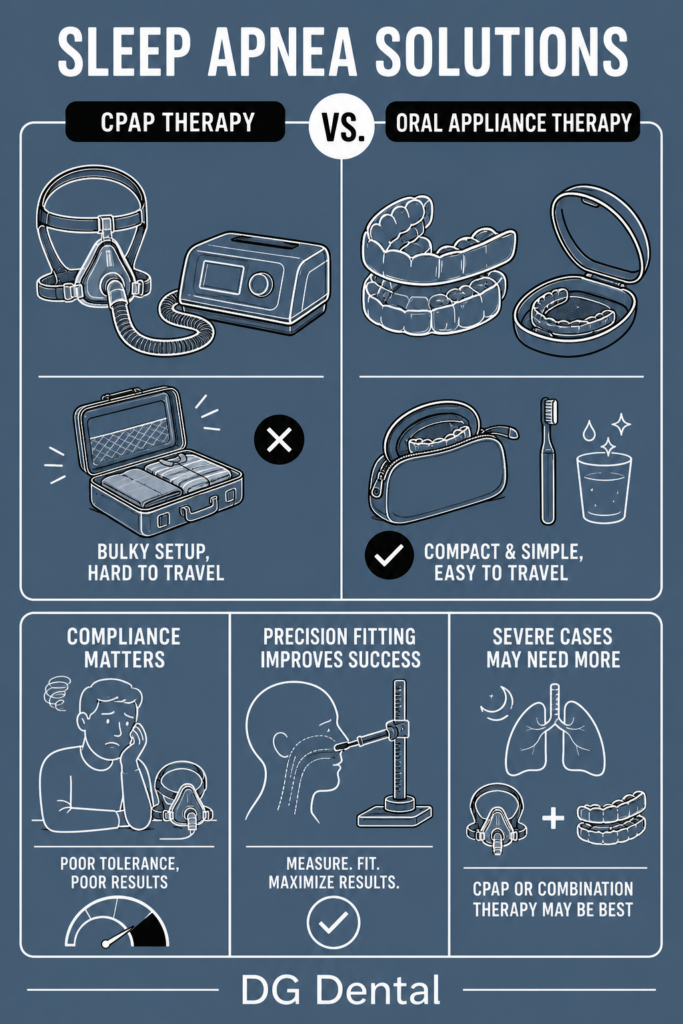
CPAP is effective when used, but consistent use is one of its biggest challenges. A significant portion of patients struggle to tolerate the mask, the pressure, the noise, or the tethered feeling of sleeping connected to a machine. Travel adds another layer of friction. For patients with mild to moderate sleep apnea, suboptimal CPAP compliance can leave them no better off than no treatment at all.
Why Oral Appliances Work for Many Patients
Oral appliances are small, quiet, and require no electricity. They fit easily into a travel case and don’t require distilled water or nightly equipment cleaning beyond a simple rinse. For patients who have abandoned CPAP or are newly diagnosed and seeking a less intrusive starting point, a well-fitted oral appliance can deliver meaningful symptom relief.
The key phrase is “well-fitted.” If an oral appliance isn’t adjusted to your specific anatomy, it may not open the airway enough or could cause jaw discomfort that makes it harder to wear consistently. That’s where the pharyngometer and rhinometer can make a real difference. By measuring your airway before and after the jaw is repositioned, Dr. Green can fine-tune the appliance so it has the best chance of working as it should.
Our airway dentistry services are built around this kind of precision. Rather than fitting a device and sending you home, we use diagnostic data to confirm the appliance is achieving the airway opening it’s designed to provide.
When CPAP Is the Better Choice
Oral appliances aren’t the best option for everyone. For people with severe sleep apnea, CPAP often does a better job of lowering AHI. In some cases, using both CPAP and an oral appliance together may help patients benefit from CPAP while using a lower, more comfortable pressure setting. If your sleep study shows severe sleep apnea, we’ll talk through all of your options and, when needed, work with your sleep physician to make sure you get the right care.
For patients who grind or clench, a protective oral device may serve double duty. Our sports and sleep mouthguards page outlines how these devices differ and what each is designed to address.
Insurance and Cost Considerations
One practical advantage of pursuing oral appliance therapy through DG Dental is that Dr. Green is credentialed with most major medical insurance providers, including Medicare. Oral appliances for sleep apnea are often covered under medical insurance rather than dental insurance, a distinction that surprises many patients but can significantly reduce out-of-pocket costs. Our team handles the financing and insurance process with you directly so you’re not navigating it alone.
Choose a Treatment Built Around You at DG Dental
The right sleep apnea treatment is the one you’ll actually use, and one that’s matched to the severity of your condition and the specifics of your airway. Dr. Dory Green, DMD, FAGD, brings over a decade of clinical experience to Fort Lauderdale patients seeking relief from sleep-disordered breathing, combining graduate-level training from Temple University School of Dentistry with advanced diagnostic equipment that most dental offices lack. Whether you’ve tried CPAP and found it unworkable or you’re weighing your options for the first time, we’ll build a care plan tailored to your anatomy, lifestyle, and goals.
You don’t have to choose unthinkingly between a machine and a mouthpiece. A precise airway evaluation gives you real data to guide that decision, along with the right device to back it up. Contact us to schedule your consultation.