
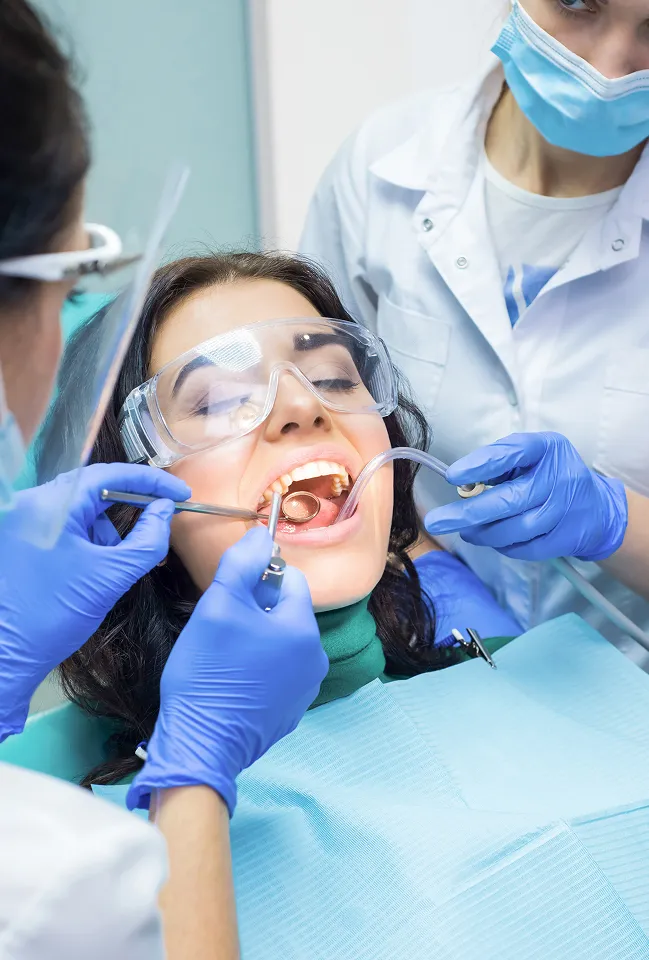


Socket Preservation Following Tooth Extraction
Socket preservation, also called ridge preservation, represents a specialized bone grafting technique performed immediately following tooth extraction to prevent the dramatic bone loss that typically occurs in extraction sites. When teeth are removed, the surrounding alveolar bone loses its functional purpose and begins resorbing, with studies showing up to 50% reduction in bone width within the first year following extraction. This bone loss complicates future implant placement and can compromise aesthetic outcomes. At DG Dental, socket preservation grafting fills extraction sites with bone material that maintains ridge dimensions while promoting healing, significantly improving conditions for subsequent implant placement.
The socket preservation procedure occurs during the same appointment as tooth extraction, adding minimal time and discomfort to the overall treatment. After carefully extracting the tooth and cleaning the socket, Dr. Green places particulate bone graft material into the extraction site, often covering it with a collagen membrane that protects the graft while facilitating tissue healing. The socket then heals with grafting material gradually becoming incorporated into surrounding bone, preserving ridge height and width that would otherwise deteriorate. Patients planning to replace extracted teeth with dental implants benefit tremendously from socket preservation, as the maintained bone volume often eliminates the need for more extensive grafting procedures later.
Recovery from socket preservation proves remarkably similar to healing from simple extraction alone, with most patients experiencing minimal additional discomfort beyond what tooth removal itself causes. The grafted socket typically heals sufficiently for implant placement within three to four months, though timing varies based on the size of the extraction site and grafting materials used. Dr. Green monitors healing progress through follow-up appointments, using clinical examination and radiographic imaging to determine when bone has matured adequately for proceeding with implant surgery. This proactive approach to preserving bone following extraction represents one of the most cost-effective investments patients can make in their long-term dental health and implant success.
Sinus Lift Procedures for Upper Jaw Implants
Sinus lift surgery, also termed sinus augmentation, addresses the unique challenges of placing dental implants in the posterior upper jaw where bone height is often inadequate due to the maxillary sinus anatomy. The maxillary sinuses, large air-filled cavities located above the upper molars, expand over time following tooth loss, leaving insufficient bone for stable implant placement. At DG Dental in Fort Lauderdale, Dr. Green performs sinus lift procedures that elevate the sinus membrane and place bone graft material beneath it, creating adequate vertical bone height for successful posterior implant placement where inadequate bone would otherwise prevent implant therapy.
Two primary sinus lift techniques exist—lateral window and osteotome approaches—with Dr. Green selecting the appropriate method based on the amount of existing bone and the number of implants planned. The lateral window technique involves creating a small access opening in the sinus wall, gently elevating the sinus membrane, and packing the created space with bone graft material. This approach accommodates larger augmentations and multiple implant sites simultaneously. The osteotome or crestal approach, suitable when some residual bone exists beneath the sinus, uses specialized instruments inserted through the implant osteotomy site to gently elevate the sinus membrane while condensing bone, often allowing simultaneous implant placement.
Recovery from sinus augmentation typically involves temporary sinus precautions, including avoiding forceful nose blowing, limiting sneezing to the open-mouth technique, and sometimes using decongestants to promote drainage. Most patients experience minimal discomfort managed easily with over-the-counter pain medications, returning to normal activities within days. The grafted sinus region requires approximately four to six months for bone maturation before implants can be placed, though simultaneous placement sometimes proves feasible with certain techniques and adequate initial bone volume. The investment in sinus augmentation enables implant placement in areas that would otherwise require removable partial dentures or dental bridges, providing superior functional and aesthetic outcomes for posterior tooth replacement.
Ridge Augmentation for Extensive Bone Loss
Ridge augmentation addresses more extensive bone deficiencies that simple socket preservation or localized grafting cannot adequately correct. Significant bone loss from advanced periodontal disease, long-term tooth absence, traumatic injuries, or developmental abnormalities creates ridge defects requiring substantial augmentation before implant placement becomes feasible. At DG Dental, Dr. Green performs ridge augmentation procedures using block grafts, guided bone regeneration techniques, or combinations approaching that rebuild severely deficient bone structures and restore proper ridge contours for optimal implant placement and aesthetic outcomes.
Block bone grafts utilize larger pieces of bone, typically harvested from the patient’s jaw or occasionally from other body sites for extensive augmentations, secured with small titanium screws to deficient ridge areas. These solid bone blocks provide immediate structural support while gradually remodeling into the patient’s natural bone through biological processes. The block graft technique proves particularly valuable for horizontal ridge deficiencies where significant width augmentation is required. Guided bone regeneration (GBR) employs particulate graft materials contained beneath specialized membranes that exclude soft tissue while allowing bone cells to populate the grafted area, promoting predictable bone formation.
The recovery timeline for ridge augmentation extends longer than simple grafting procedures, typically requiring four to six months for bone maturation before implant placement. The more extensive nature of ridge augmentation necessitates greater patient commitment to post-operative care, including soft diet adherence, meticulous oral hygiene, and activity limitations during initial healing. However, the transformative results of successful ridge augmentation enable implant treatment in situations previously requiring removable prosthetics, providing patients with fixed tooth replacements offering superior function, comfort, and aesthetics. Dr. Green’s expertise in complex bone grafting ensures even challenging cases receive expert care producing excellent outcomes.
The Bone Grafting Procedure at DG Dental
The bone grafting process at DG Dental begins with a comprehensive consultation and evaluation using advanced diagnostic imaging including cone beam computed tomography (CBCT) that reveals three-dimensional bone architecture, allowing precise treatment planning. Dr. Green carefully assesses bone quantity, quality, and defect morphology, discussing treatment options and explaining procedures in detail so patients understand what to expect. This consultation includes reviewing sedation options, recovery protocols, and timeline expectations from grafting through final implant restoration.
On the day of surgery, patients receive appropriate anesthesia, ranging from local anesthesia to sedation dentistry options depending on procedure complexity and patient preference. Dr. Green creates carefully designed incisions providing adequate surgical access while minimizing tissue disruption, gently reflecting gum tissues to expose underlying bone. The grafting material is precisely placed and secured, with membrane barriers positioned when indicated by the grafting technique. Meticulous soft tissue closure ensures primary wound healing while protecting grafts during the critical initial healing phase.
Post-operative care instructions address pain management, swelling reduction through ice application, dietary modifications to protect healing grafts, and oral hygiene adaptations preventing infection while avoiding surgical site disruption. Most patients manage discomfort effectively with prescribed or over-the-counter medications, experiencing swelling that peaks within 48-72 hours before gradually resolving. Follow-up appointments allow Dr. Green to monitor healing progress, remove sutures when appropriate, and address any concerns arising during recovery. The dedication to comprehensive post-operative support ensures optimal healing and successful graft incorporation, establishing the solid foundation necessary for subsequent implant placement.
All-on-4 Dental Implants: Minimizing Grafting Needs
For patients with significant bone loss seeking full arch tooth replacement, the All-on-4 dental implant technique often eliminates or dramatically reduces bone grafting requirements. This innovative approach utilizes four strategically angled implants that maximize use of existing bone while avoiding anatomical structures like sinuses and nerves that typically necessitate grafting. At DG Dental in Fort Lauderdale, Dr. Green offers All-on-4 treatment as an expedited path to full arch restoration, allowing many patients who were told they needed extensive grafting to proceed directly to implant placement with immediate provisional teeth.
The All-on-4 concept positions posterior implants at angles up to 45 degrees, engaging dense anterior bone and bypassing areas of bone deficiency that would otherwise require augmentation. This strategic implant placement distributes forces optimally while creating the span necessary to support complete arch prosthetics. The tilted posterior implants also allow use of longer implant lengths, achieving superior initial stability even in compromised bone. The combination of angled placement and maximized use of available bone frequently eliminates sinus grafting in the upper jaw and nerve repositioning in the lower jaw—procedures that traditionally add months to treatment timelines and increase costs substantially.
Patients receiving All-on-4 treatment typically leave surgery with provisional fixed teeth on the day of implant placement, immediately restoring function and aesthetics while implants integrate with surrounding bone. This immediate loading protocol proves successful due to the superior stability achieved through the All-on-4 design. Following a healing period of several months, Dr. Green replaces provisional restorations with definitive prosthetics—often beautiful zirconia fixed bridges—completing the transformation from failing dentition or edentulism to fully functional, attractive smiles. For patients seeking efficient, predictable full arch restoration with minimal surgical interventions, All-on-4 represents a breakthrough treatment option available at DG Dental.
Recovery and Healing Following Bone Grafting
Understanding the healing timeline and recovery expectations helps patients prepare adequately for bone grafting procedures and subsequent implant placement. Initial soft tissue healing occurs within two weeks following surgery, with sutures either dissolving or requiring removal during follow-up appointments. During this early phase, patients should adhere to soft diet recommendations, maintain excellent oral hygiene while avoiding surgical sites, and manage any discomfort with prescribed or recommended medications. Swelling and bruising, when they occur, typically resolve within the first week, with most patients returning to normal activities within days of surgery.
Bone maturation—the biological process where grafted material becomes incorporated into surrounding bone and remodels into functional bone tissue—requires substantially longer than soft tissue healing. Minor grafting procedures like socket preservation may heal sufficiently for implant placement within three to four months, while major augmentations including ridge grafting or sinus lifts, typically require four to six months for adequate maturation. Dr. Green uses clinical evaluation and radiographic imaging to assess healing progress, determining when bone has achieved sufficient density and volume for proceeding with implant surgery.
Factors influencing healing success include patient age, overall health status, nutrition, smoking status, and adherence to post-operative instructions. Smoking significantly impairs bone healing and dramatically increases grafting failure rates, making smoking cessation essential for patients undergoing bone augmentation procedures. Conditions affecting bone metabolism including uncontrolled diabetes, osteoporosis, and certain medications may impact healing, requiring careful management and sometimes extended healing periods. Dr. Green provides personalized recovery protocols accounting for individual patient factors, maximizing success rates while ensuring patient comfort throughout the healing journey from grafting through final implant restoration.
Who Needs Bone Grafting for Dental Implants?
Determining candidacy for bone grafting requires a comprehensive evaluation of bone quantity, quality, and distribution in relation to planned implant positions. Patients who have been missing teeth for extended periods typically experience significant bone loss, making grafting necessary before implant placement. Those who lost teeth due to periodontal disease often have reduced bone volume from the disease process itself, requiring augmentation to create an adequate foundation for implants. Individuals with naturally thin bone, enlarged sinuses, or anatomical variations may need grafting even when tooth loss is recent.
Advanced imaging technology, including cone beam CT scans, provides the three-dimensional information Dr. Green needs to accurately assess bone conditions and determine grafting requirements. These scans reveal bone height, width, and density at proposed implant sites while showing anatomical structures like sinuses, nerves, and adjacent tooth roots that influence treatment planning. Some patients assumed to require extensive grafting discover adequate bone exists for direct implant placement, while others anticipating simple implant surgery learn grafting represents necessary preliminary treatment, ensuring implant success.
Not every dental implant patient requires bone grafting. Individuals who undergo immediate implant placement following extraction often have adequate bone, particularly when socket preservation grafting occurs at the extraction appointment. Patients receiving implants in anterior regions where bone typically maintains better volume may avoid grafting needs. The All-on-4 technique specifically benefits patients with significant bone loss by maximizing use of available bone through strategic implant positioning. Dr. Green evaluates each patient individually, recommending grafting only when necessary for achieving predictable, long-term implant success while exploring alternatives when multiple treatment pathways exist.
Advanced Grafting Techniques and Technologies
Modern bone grafting incorporates numerous technological advances that improve outcomes while enhancing patient comfort and reducing recovery time. Platelet-rich plasma (PRP) and platelet-rich fibrin (PRF), concentrated from the patient’s own blood, contain growth factors that accelerate healing and enhance bone regeneration when combined with grafting materials. At DG Dental, these biological enhancements can be incorporated into grafting procedures, potentially shortening healing times while improving graft integration. The process involves drawing a small amount of blood, processing it to concentrate platelets, and mixing the resultant material with bone grafts.
Guided bone regeneration membranes have evolved from non-resorbable materials requiring second surgeries for removal to advanced resorbable membranes that eliminate removal procedures while providing extended protection for healing grafts. Some modern membranes incorporate antimicrobial properties or controlled-release growth factors that further optimize healing. The choice of membrane type depends on defect morphology, grafting material, and clinical circumstances, with Dr. Green selecting optimal materials for each unique situation.
Three-dimensional treatment planning software allows virtual surgery before actual procedures, enabling precise determination of grafting needs and optimal implant positioning. This technology-enhanced planning improves accuracy while reducing surgical time, contributing to better outcomes with less patient discomfort. Custom surgical guides fabricated from virtual plans ensure grafts and implants are placed exactly as planned, maximizing success rates. Dr. Green’s commitment to utilizing advanced technologies ensures patients at DG Dental benefit from cutting-edge approaches producing predictable, excellent results even in complex cases requiring extensive bone augmentation.
Cost Considerations and Insurance Coverage
Bone grafting costs vary significantly based on procedure complexity, grafting material types, and the extent of augmentation required. Simple socket preservation grafting costs less than extensive ridge augmentation or sinus lift procedures, while autogenous grafts involving secondary harvest sites add surgical time and complexity, affecting fees. At DG Dental, Dr. Green provides detailed fee estimates during consultations, ensuring patients understand financial commitments before proceeding with treatment.
Dental insurance coverage for bone grafting depends primarily on policy specifics and whether grafting is deemed medically necessary versus elective. Many plans provide partial coverage for grafting performed in conjunction with implant placement, recognizing that adequate bone represents an essential foundation for implant success. However, coverage limits, exclusions, and pre-authorization requirements vary widely among insurance carriers and individual policies. The administrative team at DG Dental assists patients in understanding their benefits, submitting documentation supporting medical necessity when appropriate, and maximizing available coverage while offering flexible payment plans for portions that patients must fund.
When evaluating costs, patients should consider the value bone grafting provides in enabling dental implant treatment—the most successful, longest-lasting tooth replacement option available. Implants preserve remaining bone through mechanical stimulation mimicking natural tooth roots, preventing the progressive facial changes and additional bone loss that occur with removable dentures or tooth-supported bridges. The investment in bone grafting creates a foundation for implant treatment, offering superior function, comfort, aesthetics, and longevity compared to alternative tooth replacement options. Dr. Green helps patients understand both immediate costs and long-term value when making decisions about bone augmentation and implant therapy.
Alternatives to Bone Grafting
While bone grafting enables implant placement in many challenging situations, alternatives exist for patients who prefer to avoid grafting procedures or for whom grafting poses medical contraindications. Shorter implants, made possible by advances in implant design and surface treatments that enhance osseointegration, sometimes accommodate limited bone height without requiring vertical augmentation. These abbreviated implants require adequate bone width and quality for stability but may eliminate needs for sinus lifts or other vertical grafting procedures in select cases.
Narrow-diameter implants designed specifically for areas with reduced bone width provide another grafting alternative, though their applications remain limited to certain clinical situations where biting forces remain modest. The All-on-4 dental implant concept, previously discussed, represents perhaps the most significant advance in avoiding grafting for full arch restorations through strategic angled implant placement, maximizing use of available bone. Zygomatic implants, anchoring in the cheekbone rather than the upper jaw, offer solutions for patients with severe maxillary bone loss who wish to avoid extensive grafting, though their use remains specialized.
Removable dentures or tooth-supported dental bridges represent non-implant alternatives, avoiding grafting entirely, though these options lack implants’ bone-preserving benefits and may prove less satisfactory in terms of function, comfort, and aesthetics. Dr. Green discusses all viable treatment options during consultations, explaining the advantages and limitations of each approach so patients can make informed decisions aligned with their priorities, health status, and preferences. The comprehensive evaluation and treatment planning at DG Dental ensure every patient receives recommendations tailored to their unique circumstances rather than one-size-fits-all approaches that may not serve individual needs optimally.